

Can Police Search You Without a Warrant in Georgia?
Know Your Rights During Georgia Police Searches
Can Police Search You Without a Warrant in Georgia? What You Need to Know
If you are wondering when police can search you without a warrant, you may be dealing with a stressful situation. It could be a traffic stop that felt aggressive, an unexpected pat-down, a request to search your car, or a search of your belongings that left you confused. These moments can raise serious questions: Did the officer have the legal right to search? Were your rights violated? Can the evidence be used against you?
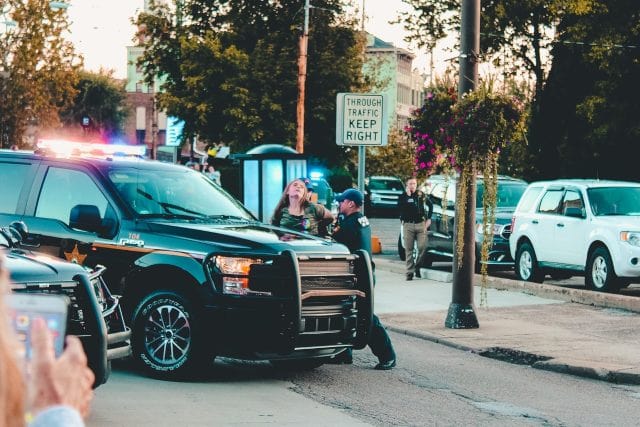
Both the Fourth Amendment and Georgia’s constitution provide strong protections against warrantless searches. Officers are only allowed to conduct searches without a warrant in specific, clearly defined situations. Understanding these limits is crucial because even minor errors by law enforcement can determine whether evidence is allowed in your case or thrown out altogether.
At Frye Law Group, we help individuals throughout Georgia navigate these situations. Led by former prosecutor Kim Frye, we focus on search and seizure law every day. We analyze how the stop occurred, how the search began, and whether the officer’s actions were within the bounds of the law. Our approach is grounded in Georgia law, constitutional standards, and a commitment to protecting your rights.
How Georgia Law Restricts Warrantless Searches
Under the Fourth Amendment and the Georgia Constitution, a search is considered unlawful if it is conducted without a warrant, unless it falls under one of the specific, legally recognized exceptions. These exceptions are strictly defined and limit the actions that police officers can take during encounters.
When Georgia Law Allows a Warrantless Search
Georgia law permits specific warrantless searches, such as those conducted after a lawful arrest. In these cases, an officer may search you and the immediate area around you for weapons or evidence. However, this search must be reasonably related to the arrest and cannot be used as an opportunity to look through unrelated items or spaces.
Court decisions have established other exceptions. For example, Georgia courts permit warrantless searches in urgent situations that require immediate action, such as preventing harm or preventing evidence from being destroyed. An officer might also conduct a limited search during a traffic stop for safety reasons.
Even in these situations, the search cannot go beyond what is necessary for that specific exception. A protective pat-down for weapons, for instance, does not give an officer the right to open containers or search your trunk.
How We Evaluate the Legality of a Search
Every warrantless search depends entirely on the specific facts of the case. When we review a search, we focus on three key questions:
- Was the initial stop or encounter lawful?
- Did a legally recognized exception to the warrant requirement apply to the situation?
- Did the officers’ actions stay within the strict limits of that exception?
Georgia’s appellate courts carefully review these issues. If a search is found to be unlawful, the evidence obtained from it is often suppressed, meaning it cannot be used against you.
When clients ask if the police can search them without a warrant in Georgia, the answer is always, “it depends on the context.” The rules for a traffic stop are different from those for an encounter on the sidewalk or a search of your home. We analyze every detail of the situation because your rights and the outcome of your case depend on these crucial distinctions.
When Can Police Search Without a Warrant?
In Georgia, police typically require a warrant to search. However, they may perform a warrantless search if a legally recognized exception applies. These exceptions are based on the Fourth Amendment, the Georgia Constitution, state law (O.C.G.A. § 17-5-1), and court decisions. Each exception is narrow and applies only to specific facts. When the government claims an exception justifies a search, we evaluate that claim against the strict legal standards established by Georgia law.
Consent

A search is lawful if you voluntarily give the police permission to conduct it. For consent to be valid, it must be freely given by someone who has authority over the property. Courts will invalidate consent if officers suggest you have no choice, threaten to get a warrant anyway, or misinform you about your rights. You have the right to limit or withdraw your consent at any time. Once you revoke consent, the police must stop searching unless another exception applies.
Exigent Circumstances (Emergencies)
This exception allows a search when officers face a genuine emergency, such as an immediate threat to someone’s safety, the risk that evidence will be destroyed, or the pursuit of a fleeing suspect. Georgia courts require objective proof that waiting to get a warrant would have been impractical. If officers had enough time to secure the area and obtain a warrant, this exception does not apply. We challenge these claims when the facts do not show an actual emergency.
Search Incident to a Lawful Arrest
Under O.C.G.A. § 17-5-1, police may search a person and the area within their immediate control when making a lawful arrest. This is meant to protect officer safety and prevent the destruction of evidence. The search is strictly limited to the area the person could reach or “grab.” Once an individual is handcuffed and moved away from an object or area, Georgia courts often rule that further searching is not allowed. This exception does not permit a full search of a home, a locked phone, or sealed containers.
Plain View
Officers can seize evidence without a warrant if they see it in plain view. Three conditions must be met:
- The officer must be legally in the location where they see the item.
- It must be immediately evident that the item is incriminating.
- The officer cannot move or disturb other objects to see the item.
The plain view doctrine only allows seizure, not a further search. If an officer moves things around to “create” a plain view, the evidence can be suppressed.
Automobile Exception
Police can search a vehicle without a warrant if they have probable cause to believe it contains evidence of a crime. This rule exists because vehicles are mobile, and people have a lower expectation of privacy in them compared to a home.
Probable cause may arise from the discovery of illegal items in the car or a reliable alert from a K-9 unit. We scrutinize the basis for probable cause, including whether the officer’s observations were properly documented and if the K-9 was used correctly.
What to Do if You Think Your Rights Were Violated
If a police encounter feels wrong, it might be because your rights have been violated. Additionally, if officers exceed these limits, any evidence they gather may be excluded from consideration. This is known as the exclusionary rule. If the search was illegal, the state could lose the evidence it needs to prosecute your case.
Write Down What Happened
Details are critical when evaluating whether a search was legal. Courts examine what the officer knew, said, and did at every stage of the encounter. As soon as possible, write down everything you remember. Include where the stop happened, what the officer claimed to see or smell, whether they touched or moved you, and what items they searched. If there are witnesses or videos, ensure that you note and secure that information.

Clearly State You Do Not Consent
If officers try to search without a warrant, clearly say, “I do not consent to a search.” This statement protects your rights under the laws of the State of Georgia. Do not argue or interfere physically. It is lawful to refuse consent, but any physical resistance could lead to charges.
Limit What You Say
If a search is illegal, anything you voluntarily say could still be used against you, even if the evidence is suppressed. To protect yourself, invoke your right to remain silent and ask for a lawyer. Once you do this, stop talking until your attorney is present.
Contact a Defense Attorney Immediately
The sooner you get legal help, the stronger your defense will be. At Frye Law Group, we act quickly to gather evidence such as body-camera footage, dash-camera video, dispatch audio, K-9 deployment logs, and officer training records before they are overwritten. We compare the officer’s report to physical evidence, surveillance footage, and GPS data to identify any inconsistencies that could support excluding the evidence.
Protect Sensitive or Private Materials
Illegal searches often involve sensitive materials, such as phones, computers, or documents that may include privileged information. Georgia courts take the attorney-client privilege seriously. If officers access private or sensitive data, please notify us immediately so we can take prompt action to protect it and pursue additional remedies if necessary.
Protecting Your Rights with Our Extensive Legal Experience
When a search feels wrong, it’s not just about evidence. You’re worried about your record, your job, your license, and your family. At Frye Law Group, our goal is to take that stress and create a clear legal strategy based on Georgia law. We practice in search-and-seizure cases and handle them daily in Marietta and courts across Georgia. Here’s how we handle your case:
-
Reconstruct the entire encounter: We gather evidence like body-cam and dash-cam footage, dispatch logs, radio communications, and written reports. We create a timeline to determine when you were stopped, searched, and what legal justification the officer had at each step.

-
Challenge the search exception claimed by the state: Whether the state argues consent, exigent circumstances, search incident to arrest, plain view, or the automobile exception, we compare their claims to Georgia case law and the facts of your case. If the required legal elements are not met, we file a motion to suppress the evidence.
-
Examine the evidence using science: In cases involving drugs, DUI, or weapons, we closely review field tests, lab reports, and chain-of-custody records. If the stop or search was flawed and the scientific evidence is weak, we use both to challenge the prosecution’s case.
-
Use suppression motions to improve outcomes: A strong motion to suppress can lead to better plea deals, reduced charges, or even the removal of mandatory minimum sentences. In some cases, a successful suppression motion leaves the state with no case at all. We structure your defense to maximize these opportunities.
-
Support you at every stage: We prepare you for interviews, probation meetings, and hearings to ensure you don’t unintentionally help the state’s case with new statements. If necessary, we reserve all search-and-seizure issues for appeal in the event the court rules against us.
This is about more than a traffic stop or the contents of a bag. It’s about your future. Our job is to know the law better than the officers who searched you, uncover any violations, and fight for the best possible outcome under Georgia law.
Take Control of Your Defense Today
Warrantless searches are subject to strict rules. Law enforcement officers must follow both the Constitution and Georgia law at all times. There are limited exceptions to the warrant requirement, including consent, exigent circumstances, searches incident to arrest, plain view, and the automobile exception. If the government oversteps these limits, we hold them accountable. If a search is unlawful, we work to exclude that evidence from court.
Start with a confidential consultation. Share your story, and we explain how we can help. We are ready to fight for you with experience, science, and determination.
If you or a loved one believes you were subjected to an unlawful search, contact us today. We answer the key question—can the police search you without a warrant in Georgia—based on the facts of your case. Then, we fight to protect your rights and your future.
Tell Us About Your Marietta Criminal Defense Case
MOST SITUATIONS AREN’T BLACK AND WHITE. WE’LL LISTEN TO YOUR STORY AND HELP YOU FIND THE BEST POSSIBLE OUTCOME FOR YOUR MARIETTA CRIMINAL DEFENSE CASE
How Does Title IX Work In Georgia?
Title IX is a federal civil rights law that prohibits sex-based discrimination at any school...
The Impact Of Drug Convictions On Employment In Georgia
A drug conviction in Georgia can affect your ability to get a job, keep a professional license,...
Open Container Law in Marietta, Georgia: What You Need to Know
The open container law in Marietta includes a permanent exception for the downtown entertainment...
What Should I Do If I Get Stopped For A DUI in Marietta?
Contact Our Criminal Defense Attorney today
REPRESENTING THOSE IN COBB, BARTOW, CHEROKEE, FULTON, PAULDING AND DOUGLAS COUNTIES.
Because you have such a limited amount of time to contest your suspended license and the seriousness of DUI charges in Paulding County Georgia, you should call a Marietta criminal defense attorney as soon as you receive notice of your charge.
If you or someone you know has been charged with a DUI, contact our office at Frye Law Group today to begin your defense.
Got a DUI? Call a Marietta criminal defense attorney today: 770-919-9525.


